ITMO Registry · Article 6 · Launched at COP25

A registry built for Article 6 transfers.

The ITMO Registry records Internationally Transferred Mitigation Outcomes under the Paris Agreement. It launched at COP25 in Madrid in 2019, links directly to the CTX exchange, and gives holders of UN CDM credits a way forward as that mechanism closes.

2019
Launched at COP25, Madrid
1 t
CO₂e reduced or removed per ITMO
Art. 6.2
Paris Agreement framework
None
Registry transfer or retirement fees once issued
Article 6, explained

How countries trade emission reductions under the Paris Agreement

Each country that signed the Paris Agreement sets its own climate target, its Nationally Determined Contribution (NDC). Article 6 lets countries work together to meet those targets, including by transferring emission reductions from one to another.

Article 6.2: country to country

Countries agree transfers between themselves, in pairs or in groups, and the units they transfer are ITMOs. The framework is decentralised and country-led: the governments involved authorise the units and report on them.

Article 6.4: a UN mechanism

A centralised crediting mechanism overseen by a UN Supervisory Body, often seen as the CDM's successor. Projects follow standard rules for validation, and the mechanism sets aside a share for adaptation and for an overall cut in global emissions.

Corresponding adjustments

The accounting that stops one tonne being counted twice. The country that sells adds the transferred amount back to its emissions balance, and the country that buys subtracts it. Only the buyer counts the reduction.

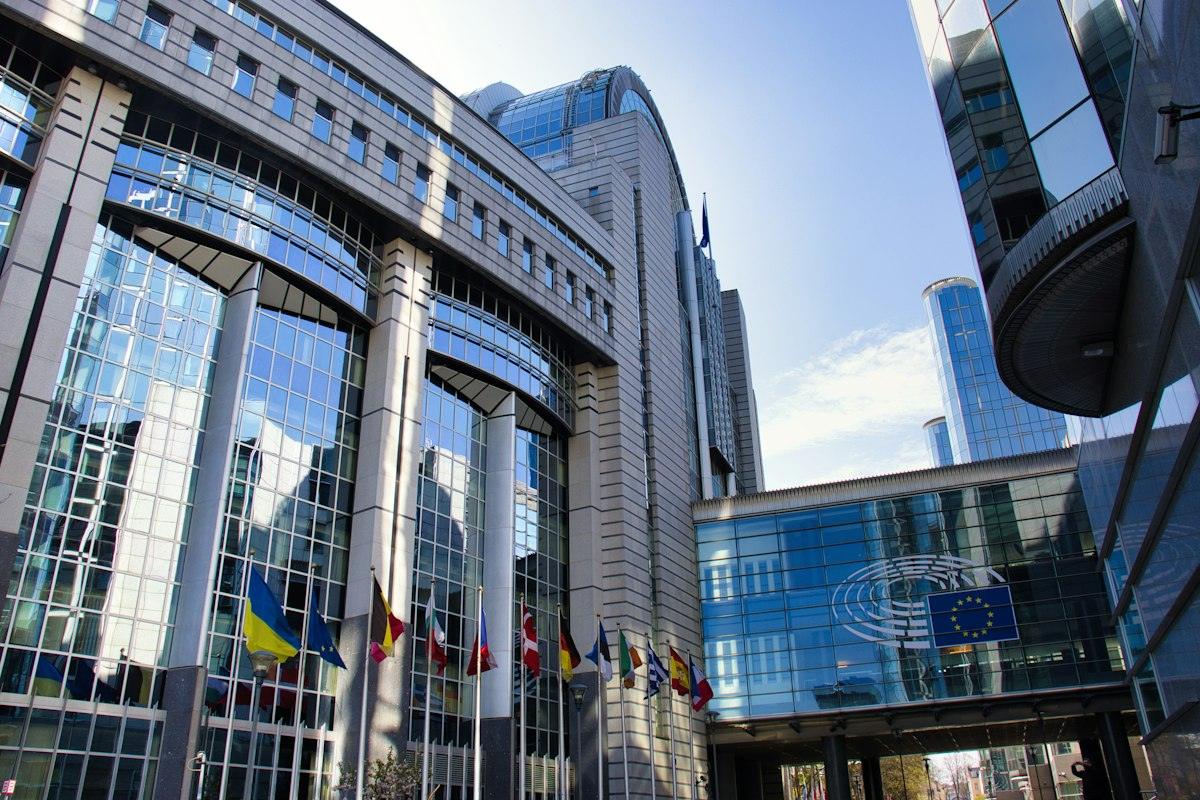
Glass-fronted government buildings with a row of national flags outside
What is an ITMO?

One tonne, authorised to cross a border.

An ITMO, or Internationally Transferred Mitigation Outcome, represents one tonne of CO₂ or CO₂-equivalent reduced or removed and transferred from one country to another under Article 6.2. The receiving country can count it toward its NDC.

ITMOs can come from the same projects as voluntary credits, backed by the same third-party monitoring and verification reports. The difference is government approval. A credit becomes an ITMO only when the host country authorises it, usually with a Letter of Authorisation, and it meets that country's Article 6 requirements.

Authorised units can also be used for other international purposes, such as airlines' offsetting obligations under CORSIA.

Side by side

A voluntary credit and an ITMO can come from the same project

What separates them is authorisation by the host country, and the accounting that follows.

Voluntary credit

Certified, used for voluntary claims

Issued under a voluntary standard and bought by companies and individuals to offset their own emissions.

  • Third-party monitoring and verification
  • No host-country authorisation needed
  • No corresponding adjustment
ITMO

Certified and authorised for transfer

Approved by the host government and counted once, by the buyer, under Article 6.

  • Third-party monitoring and verification
  • Host-country Letter of Authorisation
  • Corresponding adjustment applied
A braided river seen from the air
The ITMO Registry

Launched at COP25. Now linked to CTX.

The registry was launched at COP25 in Madrid in December 2019 to record ITMOs and the projects behind them. After a pause, it has been relaunched on upgraded Global Carbon Registry technology and fully linked to the CTX exchange.

  • 2019 Launched at the UN climate conference, COP25
  • OTC Buy directly through the registry, over the counter
  • CTX Or trade electronically on the CTX exchange
  • Nations Sub-registries can be set up for host countries
Who it's for

Host countries, project developers and buyers

Host countries

The registry can provide a national sub-registry, and nations can hold their own registry accounts for bilateral trades. Authorisation stays with the host government.

Project developers

Register projects and have credits issued in the registry. One account can hold several projects under common ownership or shared proponents, and CDM projects have a route across.

Buyers of ITMOs

Buy directly through the registry or electronically on CTX. Once credits are issued, moving or retiring them carries no registry fee.

CDM Fire Exit

A way out for CDM credits before the registry closes

The UN is winding down the Clean Development Mechanism and its registry. Once the CDM Registry closes, no transfers, cancellations or retirements will be possible, and CERs still held there will have nowhere to go. CTX's CDM Fire Exit converts them into credits you can still trade.

01

Instruct

Sign a one-page conversion instruction and pay the conversion fee of US$0.05 per credit.

02

Cancel

CTX files the cancellation of your CERs in the CDM Registry.

03

Reissue

The same number of CTX CERs is issued to your account, one for one, keeping the original project ID, vintage and serial references.

04

Trade or retire

Your CTX CERs are listed on CTX again, where they can be sold or retired with a public retirement certificate.

Know what you hold

What a converted credit is, and what it isn't

CTX CERs keep the climate benefit and the trail back to the original project. They do not carry UN or host-country status.

What CTX CERs are

Voluntary credits, traceable to the CDM

  • Issued one for one against cancelled CDM CERs
  • Traceable to the original CDM project
  • Tradeable on CTX, with public retirement certificates
  • No transfer or retirement fees; CTX trading fees apply
What they are not

Not UN units, and not authorised ITMOs

  • Not CERs issued or endorsed by the UNFCCC
  • Not Article 6.4 mechanism units
  • Not authorised by a host country or backed by a corresponding adjustment
  • Not eligible for compliance schemes that require UN registry units

The route is open to CDM CER holders on CTX, including sellers whose credits sit in CTX's CDM Registry escrow account. Eligible CERs may instead move to the Article 6.4 mechanism, subject to UN and host-country rules and fees. Both routes have cut-off dates set ahead of the registry's closure, so check the current timetable before you decide.

Current dates on the CDM Fire Exit page
Requirements & guidelines

The rules for projects moving into the registry

The main requirements for CDM projects migrating to the ITMO Registry. Timing depends on UN deadlines, so talk to our team before you start.

01
One account, several projects
A single registry account can hold multiple projects with common ownership or shared proponents. Each project is still registered separately.
Accounts
02
The whole project moves
A migrating project cancels its registration in the CDM Registry. All its issued CERs are cancelled there and reissued in full in the ITMO Registry.
Migration
03
Voluntary unless authorised
Credits are reissued as ITMO Voluntary Global Carbon Credits (GCCs), unless the project already holds a government Letter of Authorisation.
Authorisation
04
Vintages after 2016
Only vintages after 2016 are reissued. Older vintages are written off.
Eligibility
05
Minimum issuance
200,000 credits, or 20% of the volume transferred, whichever is greater.
Volume
06
Pending credits wait
Pending issued credits are cancelled in the CDM Registry and recorded as Pending Issue GCCs. Until issued, they can't be traded, transferred, retired or used as an offset.
Pending
07
Spot credits only
No futures, derivatives, crypto or other regulated instruments, and no tokenisation of active GCCs.
Restrictions
08
A CTX account to trade
Trading on the exchange needs a separate CTX account alongside your registry account.
Trading
Read the full requirements
Stacks of paper files in an office Registry fees
Fees

No registry fee to move or retire an issued credit.

Once credits are issued in the ITMO Registry, transferring or retiring them carries no registry fee. That includes trades made on CTX, where neither buyer nor seller pays an ITMO Registry transfer fee. CTX's own trading fees apply to trades on the exchange.

Transfers
No registry fee
Retirements
No registry fee
Issuance
Per fee schedule
Trades on CTX
CTX trading fees
See the registry fee structure
Risks and challenges

What can go wrong in the move from Kyoto to Paris

The CDM was created under the Kyoto Protocol. Carrying its credits into the Paris Agreement era brings real risks for holders. These are the main ones, and how CTX approaches them.

The CDM Registry is closing

Its connection to national registries through the International Transaction Log is being wound down, and once the registry shuts, credits left in it can't be moved, cancelled or retired. CTX's long-standing partnership with the CDM Registry, including a reserve account, gives holders a route out before that happens.

Stranded credits

Projects that don't qualify for the Article 6.4 mechanism, or don't move in time, risk holding credits no one can use. CTX supports eligible projects in making the move.

Older credits lost value

ICVCM guidance suggested older credits held limited value, despite years of verification and use. Margins for brokers turning old CERs into voluntary credits collapsed.

Double counting

Moving credits between registries must never create a second copy. CTX's method: cancel the CER permanently, secure verifiable proof of the cancellation, and only then issue the equivalent credit elsewhere.

Paying for registries

The ITMO Registry was paused after COVID-19 disrupted the market and most nations proved unwilling to pay for registry technology. It has since been relaunched and linked to CTX.

CTX's full analysis
Questions

ITMOs and the registry, answered

An Internationally Transferred Mitigation Outcome: one tonne of CO₂ or CO₂-equivalent reduced or removed, authorised by the host country and transferred to another country under Article 6.2 of the Paris Agreement.

Not quite. Both can come from the same project and the same verification. An ITMO also needs the host country's authorisation, and a corresponding adjustment so that only the buyer counts the reduction.

They are separate but linked. The registry issues and records the credits, and CTX is where they trade. You can buy directly through the registry, over the counter, or electronically on CTX. Trading on CTX needs its own CTX account.

Once the CDM Registry closes, no transfers, cancellations or retirements will be possible, so credits left there can't be sold or used. See the CDM Fire Exit above for the alternative.

No. CTX CERs are voluntary credits issued one for one against cancelled CDM CERs, and stay traceable to the original project. They are not issued, authorised or endorsed by the UNFCCC or any host country, and don't qualify for compliance schemes that require UN registry units.

No. The ITMO Registry doesn't allow futures, derivatives, crypto or any other regulated instrument, and tokenising active credits is prohibited.

ITMO Registry

Talk to us about Article 6

Whether you represent a host country, develop projects, hold CDM credits or want to buy ITMOs, our team can take you through the registry and your options.